
Foundation training prepares a pup to become a working stock dog. At seven weeks old, pups will be learning to stay with you, off leash, while walking in the yard, woods and fields. By the time pups are eight weeks old, they can respond to simple commands such as back, to back away from a gate or door, stay, come, get in the pen, and "ahh" or "no" to stop an action. Pups are naturally tuned in to energy, tones and body language. When mindfully incorporated within our daily interactions, these methods of communication will enhance bonding with people and ease the transition of the pup taking direction from its mother to the pup taking direction from a person. The pups in the following pictures were prepared to acknowledge and respond to balanced, positive and negative energies before they were allowed near livestock.
Starting Pups

- A 10 week old pup watches her mother move ducks. No pressure is put on the pup to perform. The pup is allowed to be around age appropriate livestock, in a safe manner.The helper dog, trained for this job, is ready to be put into position to aide and protect if necessary, as is the handler. Given occasional opportunities like this, the pup will have begun to develop a working frame of mind prior to working with goats or sheep. Since the pup is very connected with people at this age, the call off is fun and easily learned.

- Here, the helper dog is keeping the goats quietly under control as we walk the field. The pups are learning to read the body language and flight zones of livestock. Due to previous encounters with livestock they are ready to study the goats and learn what reactions their own actions may cause. Familiarity with livestock allows the pups safe learning experiences in open spaces as they are not over stimulated or out of control. Their attention span is short, which is to be expected. They are having a good time and learning in a natural manner.

- In this photo the helper dog, under whistle command, is at once driving the goats across the field while preventing the goats from fleeing the pup. The goats are inticingly presented to the pup by the experienced dog. When positioned appropriately, the helper dog can present a situation to encourage the pup to circle, change directions or push the livestock. Handler intervention aides the procedure but is kept to a minimum. The 3 mo. old pup is under no pressure and is happily called off.

- This pup began lessons with his owner in handler/stockdog communication at nine weeks old. At 10 weeks old a brief session with ducks topped off the lesson. At 12 weeks old, an introduction to goats followed the lesson in communication. In this photo, the helper dog is presenting the goats to the studious pup. The following photo is of the same pup moments later.

- Compare photo #3 with this one and you will see the difference in body language of the two, 3 mo. old pups. The pup in photo #3 was brought up around livestock. She displays confidence in her stance while her tail, hung low, indicates a working attitude. The pup in photos 4 and 5 is having his first encounter with goats. His tentativeness is displayed both in stillness and in motion. Potential and desire shine through his apprehension. We will help him gain understanding and confidence through frequent, short, enjoyable encounters with livestock.
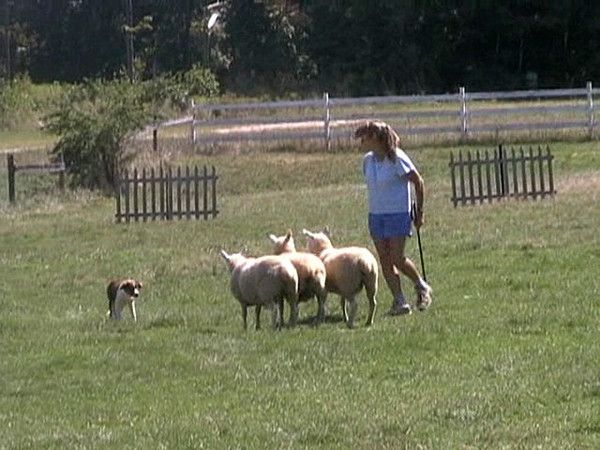
- This four month old pup was brought up around livestock. Developing confidence is indicated in his stance. The handler's shoulders are positioned so as not to put direct pressure on the pup. The pup has put pressure on himself by holding this position. The handler is ready to protect the pup if necessary and will soon move, causing the balance point to change and motion to ensue. The pup, who chose to pressure the sheep, was only allowed to experience moments of empowerment before the handler created movement to take him out of danger. Had she not, the sheep would soon learn the pup did not have experience behind his pose.

- This five month old pup is experiencing her first session with a lagre group of sheep. In this photo the black dog is keeping the flock together while helping the pup drive the sheep through the panels. The handler is moving backwards while stepping to the side, tapping the ground with a stick to show the pup where not to tread. No direct pressure put on the pup. The handler will continue to back through the panels, tapping the stick on the ground when necessary.

- This is the above pup as a two year old. She has learned patience, how and when to apply pressure, and has calm control over the goats as she drives them away. She is not only a dependable stock dog on a flock of sheep and indifferent or pushy goats, she is a good cattle dog as well.